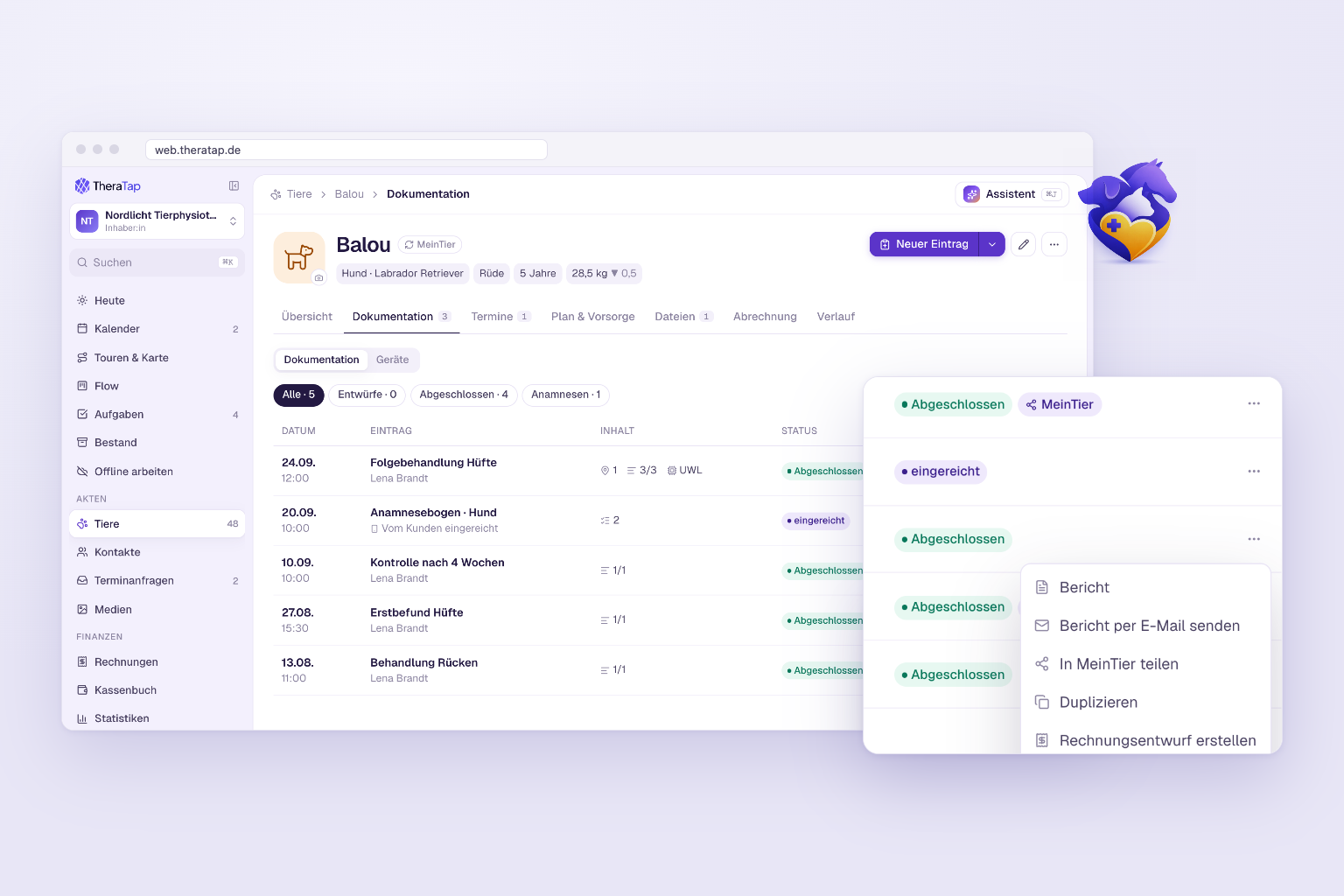
Detail views for horse and dog – skull (lateral & frontal) and musculature (front & back)
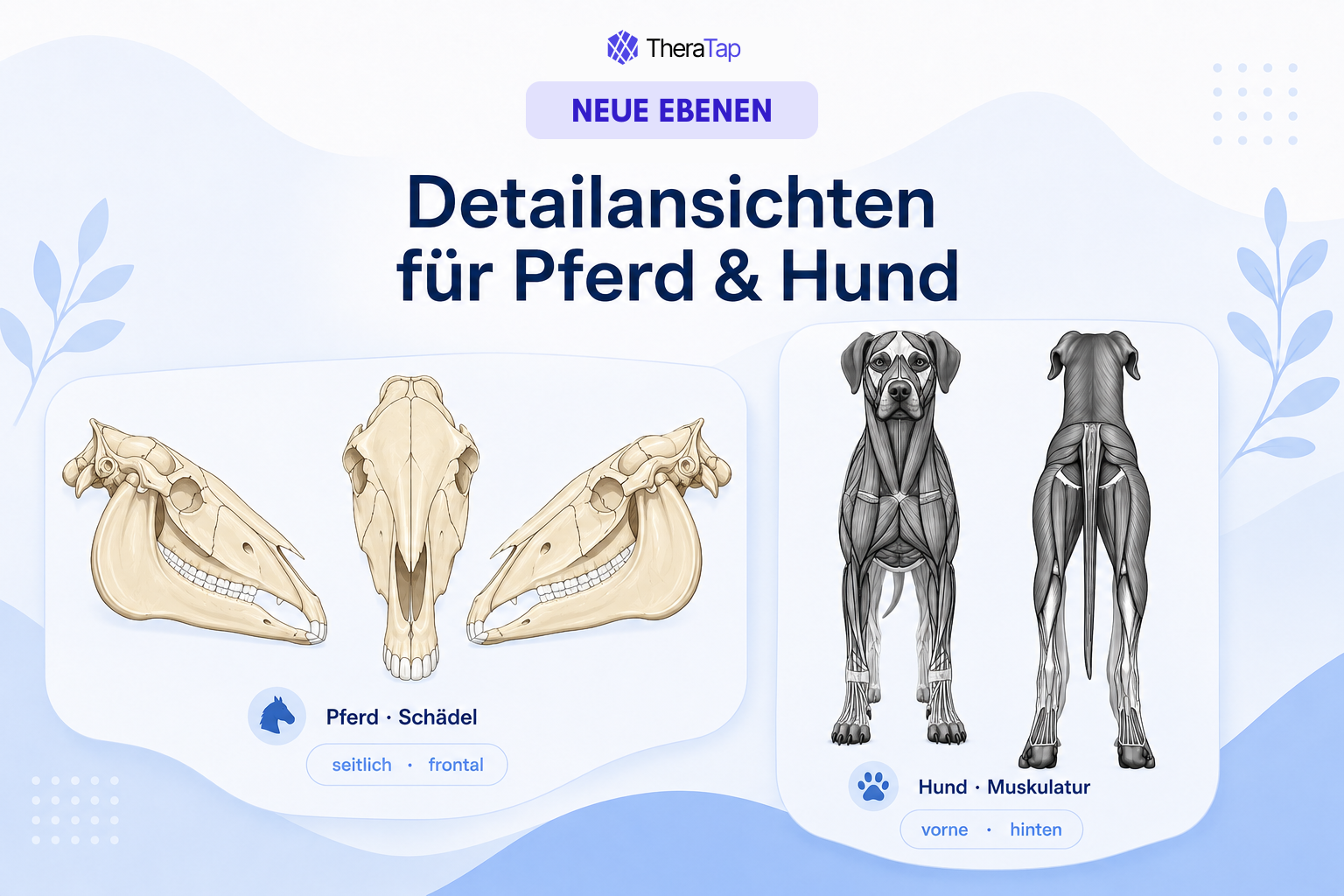
Precise therapy documentation depends on how accurately you can locate a finding on the body map. Two new layers close that gap: the horse skull in detail view, and dog musculature from the front and back.
What’s new at a glance
- Horse – skull lateral – left and right side views of the skull with individually selectable structures
- Horse – skull frontal – front view for findings in the facial and jaw area
- Dog – musculature from the front – ventral muscle view for findings on the chest, shoulder and forelimb
- Dog – musculature from the back – dorsal muscle view for findings on the back, croup and hindlimb
Horse skull: lateral and frontal view
The temporomandibular joint, temporal muscle, paranasal sinuses, teeth – the horse’s head is a complex treatment area that the full-body views could only represent in rough outline until now.
The new skull detail views show the horse’s head from three perspectives:
- Lateral left and lateral right – ideal for TMJ findings, temporal muscle, nuchal ligament attachment and dental observations
- Frontal – for findings in the nasal and forehead area, dental problems, and symmetry assessments from the front
Every structure can be selected individually and labelled in the finding – just as you’re used to from the other layers.
Dog musculature: front and back view
The lateral muscle views (left and right) for dogs have been available in the body map for a while. What was missing were the ventral and dorsal views – the musculature as you see the animal during examination from the front or from behind.
- From the front – chest muscles, anterior shoulder, forelimbs in overall view
- From the back – back muscles, croup, thighs and hindlimbs at a glance
Especially for myofascial findings or when comparing both sides of the body from the front or back, these views close a real documentation gap.
How to use the new layers
In a visual finding, select the species and layer as usual – the new views are integrated directly there:
- Horse skull: under the Bone layer, choose between Body and Skull.
- Dog musculature: under the Muscle layer, choose between Side, Front and Back.
Feedback welcome
Which layer are you still missing? Get in touch – or follow us on Instagram and in our WhatsApp channel.